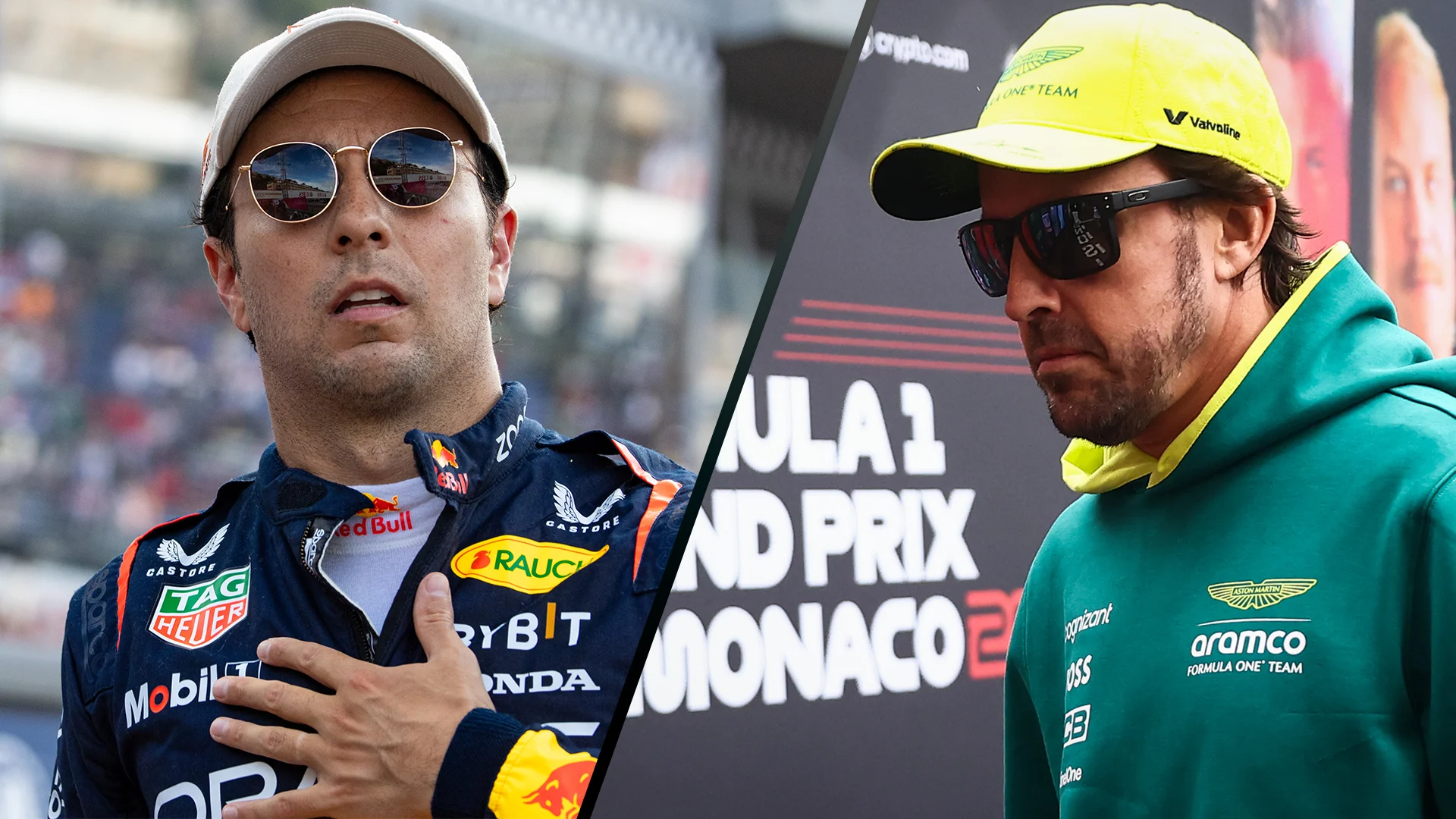
Alonso's Mixed Q1 Fortunes: From Buoyed Potential to Setup Concerns
Fernando Alonso, a two-time Formula 1 World Champion, is renowned for his exceptional skill and unwavering determination. His qualifying sessions, particularly Q1, often offer a microcosm of his team's performance, potential, and underlying challenges. Analyzing two distinct instances of his *alonso q1 performance* – the Australian Grand Prix and the Singapore Grand Prix – reveals a fascinating narrative of fluctuating fortunes for both Alonso and Aston Martin. While one saw him buoyed by unexpected progress despite a low grid slot, the other left him concerned, even after progressing further up the field. These contrasting experiences highlight the intricate dance of car development, reliability, and setup optimization in the high-stakes world of Formula 1.
The Australian Awakening: Potential Shines Through Adversity
The start of the season can be a tough testing ground, and for Aston Martin, the Australian Grand Prix qualifying presented a challenging backdrop. Their pre-season tests were marred by limited running, and the practice sessions at Albert Park continued this trend, with Alonso himself ruled out of FP1 due due to a suspected power unit issue. This significantly reduced their precious track time, a crucial commodity for understanding and optimizing a new car. Compared to their rivals, Aston Martin had considerably lower mileage heading into qualifying, placing immense pressure on the team.
Against this backdrop of adversity, Alonso's *alonso q1 performance* in Australia was a testament to his sheer talent and the car's latent potential. He provisionally held a spot in Q2 with a strong 1m 21.969s lap as the chequered flag fell, only to be narrowly demoted to P17 by Alpine's Franco Colapinto in the dying moments. Despite missing out on Q2, Alonso's mood was surprisingly optimistic. "The potential is huge," he declared, buoyed by the progress made. He noted that the team didn't significantly alter the car from FP2 to qualifying, yet they closed the gap to the leaders by two seconds, from 4.5s to 2.5s. This suggested that merely getting consistent running and understanding the car's baseline behavior was unlocking significant performance.
The underlying issue, as Alonso pointed out, was reliability. "Reliability is hurting the potential of the car a lot – if you cannot run continuously and make your set-up work…" he stated. His teammate, Lance Stroll, also suffered an Internal Combustion Engine issue in FP3, preventing him from participating in qualifying entirely, further underscoring the team's struggles. For Alonso, the objective for the race was clear: complete as many laps as possible to learn more about the car. However, even this ambition was tempered by the practicalities of F1, with a shortage of spare parts forcing a cautious approach to preserve the cars for the subsequent Chinese Grand Prix. In essence, Alonso's P17 in Australia was a moral victory, a glimmer of hope indicating that once the fundamental reliability issues were resolved and track time accumulated, significant gains were within reach.
Discover more about Alonso's perspective on Aston Martin's early season potential.
Singapore's Setup Snafu: A Different Kind of Q1 Struggle
Fast forward to the Singapore Grand Prix, a different circuit with unique demands, and Alonso's *alonso q1 performance* told a very different story, despite him progressing much further. While he eventually qualified in P10 for the main race, his journey through the qualifying sessions was described as a "roller coaster," particularly Q1, where he "barely made it to the next round."
Alonso's struggles began right from the outset of Q1. He found himself languishing in P14 and P16 at various points, positions he openly described as "definitely not the places we want to be." While he managed to recover somewhat in Q2 and Q3, eventually securing a spot in the top 10, the entire experience left him feeling "concerning." The P10 starting position, especially on a tight street circuit like Singapore, was far from ideal and promised a tough race ahead.
The crucial difference here lay in the team's approach to car setup. Unlike Australia, where the lack of running prevented significant changes, Aston Martin had made specific setup adjustments to the AMR25 ahead of Singapore qualifying. Unfortunately, these changes did not have the desired effect; Alonso reckoned they actively slowed the car down. This highlights a critical challenge in F1: the iterative process of car development. While continuous running in Australia inherently improved performance, a misstep in setup optimization in Singapore actively hampered it. This scenario underscores the delicate balance teams must strike between experimenting with new configurations and ensuring stability and predictability. The wrong setup on a demanding street circuit can drastically impact a driver's confidence and the car's performance window.
Read further into Alonso's blame of setup choices for Singapore's qualifying woes.
The Evolving Narrative of Aston Martin and Alonso's Q1
Comparing these two *alonso q1 performance* episodes provides a fascinating look into the complex and often unpredictable world of Formula 1 development. In Australia, the narrative was one of raw, untapped potential, hindered by fundamental reliability issues and a lack of track time. Alonso’s optimism, despite a P17, stemmed from the clear evidence that the car *could* be fast once it was allowed to run consistently. The gains were passive, achieved through sheer mileage rather than aggressive setup changes.
Singapore, however, presented a more active challenge. Here, the team had moved beyond the most basic reliability concerns (at least for Alonso's car in qualifying) and began to experiment with setup to extract more performance. The result was a stark reminder that not all development leads to improvement. The setup changes proved detrimental, demonstrating the double-edged sword of car optimization. Even an experienced driver like Alonso, who can often drive around a suboptimal setup, felt the impact profoundly, turning what could have been a stronger qualifying into a "concerning" affair.
These events showcase Aston Martin's journey with the AMR25. From needing to establish basic reliability and accumulate data, they progressed to a phase where fine-tuning and aggressive setup choices became the focus. Alonso's role as a seasoned veteran is crucial here; his ability to precisely diagnose car behavior and articulate the impact of setup changes provides invaluable feedback for the engineers. His candid assessments, whether of "huge potential" or "concerning" performance, serve as critical compass points for the team's development direction.
Navigating the Qualifying Tightrope: Lessons for Aspiring Teams
Fernando Alonso's contrasting Q1 experiences offer valuable insights not just for Aston Martin, but for any aspiring racing team, or even for understanding the strategic complexities of F1:
*
Prioritize Reliability and Track Time: As seen in Australia, consistent running is paramount. You cannot gather data, test setups, or allow drivers to find their rhythm if the car is unreliable. Reliability forms the bedrock of any successful development program.
*
Data-Driven Setup Decisions: The Singapore experience underscores the danger of incorrect setup choices. Modern F1 relies heavily on simulation and vast amounts of data. Every setup change should be backed by rigorous analysis and validated on track. Blind experimentation can be counterproductive.
*
Value Driver Feedback: Drivers like Alonso are not just pilots; they are highly sensitive sensors. Their nuanced feedback on car balance, grip, and handling characteristics is gold. Teams must foster an environment where this feedback is not only heard but actively translated into actionable engineering steps.
*
Manage Expectations and Celebrate Progress: In F1, raw grid position doesn't always tell the whole story. Recognizing the "huge potential" in Australia despite a P17 was a healthy way to manage expectations and maintain morale. Conversely, identifying setup issues in Singapore, even with a P10, shows a commitment to continuous improvement.
*
Strategic Resource Management: The mention of part scarcity in Australia highlights the logistical challenges of racing. Teams must balance the immediate pursuit of performance with the long-term needs of an entire racing calendar, especially when resources are tight.
In conclusion, Fernando Alonso's Q1 performances are rarely just about the grid slot itself. They are intricate narratives of a team's ongoing battle against technical challenges, the pursuit of optimal performance, and the strategic decisions that shape their trajectory. From the latent "huge potential" glimpsed in Australia, hindered by reliability, to the "concerning" impact of setup missteps in Singapore, his experiences illuminate the complex, high-pressure world of Formula 1 qualifying, where every millisecond and every engineering choice matters. These contrasting fortunes underscore the dynamic and ever-evolving nature of competition at the pinnacle of motorsport.