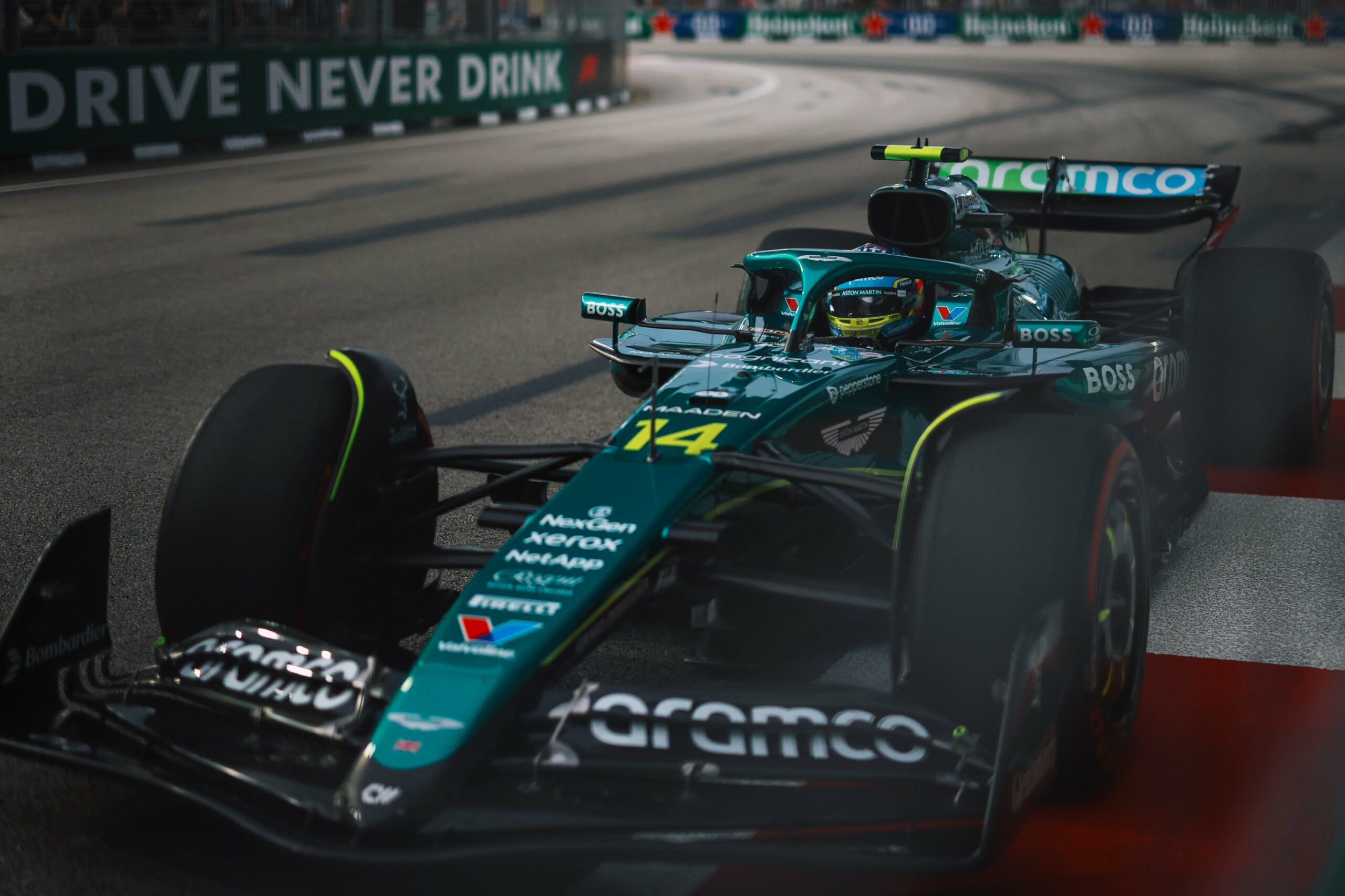
Aston Martin's Q1 Challenges: Alonso's Setup Blame in Singapore Contrasts with Australian Optimism
The unpredictable world of Formula 1 qualifying often presents a microcosm of a team's ongoing development and strategic acumen. For Fernando Alonso and Aston Martin, the opening quarter of qualifying (Q1) has been a true litmus test, yielding vastly different emotions and insights across recent races. While a disappointing P17 finish in Australia surprisingly left the veteran driver buoyed by the car's "huge potential," a mere handful of races later in Singapore, a P10 grid slot was overshadowed by Alonso's profound "concern" over a critical setup choice. These contrasting experiences offer a compelling narrative of a team navigating the fine line between unlocking raw pace and making tactical missteps, placing Aston Martin's **alonso q1 performance** squarely in the spotlight.
The Australian Paradox: Finding Potential Amidst Early Season Woes
The Australian Grand Prix presented Aston Martin with significant hurdles right from the outset. Plagued by limited pre-season testing mileage and further hampered by a suspected power unit issue in FP1 at Albert Park that sidelined Alonso, the team found itself playing catch-up. Both Fernando Alonso and his teammate Lance Stroll faced a notable deficit in track time compared to their rivals, directly impacting their ability to fine-tune the AMR25's setup. Stroll's weekend was cut even shorter after an Internal Combustion Engine (ICE) issue in FP3 prevented him from participating in qualifying altogether.
Given this challenging backdrop, Alonso's Q1 performance, culminating in a P17 elimination, might typically signal despair. However, Alonso's post-session remarks painted a remarkably different picture. Despite barely missing out on Q2, clocking a competitive 1m 21.969s lap that provisionally placed him inside the top 15, Alonso was brimming with optimism. He highlighted a substantial two-second gain in pace from FP2 to qualifying, achieved with minimal car changes. "
The potential is huge," he declared, suggesting that simply running more laps allowed the team to unlock significant performance. The core issue, as he saw it, was not the car's inherent speed, but rather the reliability challenges and restricted running that prevented them from fully understanding and optimizing its characteristics. This positive outlook, despite the grid position, underscored the team's belief in the AMR25's fundamental design. For a deeper dive into this initial optimism, consider reading
Alonso Sees 'Huge Potential' Despite Aston Martin's Q1 Hurdles.
The strategic importance of mileage in early-season development cannot be overstated. Every lap on track provides invaluable data, allowing engineers to correlate simulator predictions with real-world performance, and drivers to provide crucial feedback on handling and balance. When this data stream is interrupted by reliability issues, the development curve naturally flattens. Alonso's perspective underscored that while the immediate result wasn't ideal, the underlying trend indicated a promising trajectory for Aston Martin, especially as they explored the synergy with potential future engine partners like Honda, mentioned in the context of their development. The focus remained on continuous running, even if it meant conserving parts for subsequent races, a pragmatic approach to a long F1 season.
Singapore's Setup Trap: A Rollercoaster of Concern
Fast forward to the Singapore Grand Prix, a starkly different street circuit demanding precision, high downforce, and unwavering confidence. Here, Aston Martin's **alonso q1 performance** took on a dramatically different tone. Alonso navigated a qualifying session he would later describe as a "rollercoaster." His struggles began immediately in Q1, where he barely scraped through, hovering around P14 or P16. This narrow escape, contrasted with his Australian experience, was a precursor to deeper issues.
The root of the problem, according to Alonso, lay in a specific setup change implemented by the team ahead of qualifying. While precise details of the modifications remain confidential, Alonso strongly suggested that this particular choice adversely affected the AMR25's performance, effectively slowing the car down. Such gambles are not uncommon in F1, especially on unforgiving street circuits where even minor adjustments can yield significant gains or disastrous consequences. The tight confines and varied grip levels of Marina Bay demand a highly specialized setup, and a misstep can cascade through an entire session.
Despite the initial Q1 woes, Alonso's experience and raw talent shone through as he managed to improve slightly in Q2, securing a spot in the top 10 for the final shootout. However, Q3 provided little respite. He ultimately had to settle for P10 on the grid, a position that, while not terrible, clearly fell short of expectations for both driver and team. His blunt assessment of Q3 as "concerning," echoing his feelings about Q1, highlighted a deeper dissatisfaction than the final grid position might suggest. "
Definitely not the places we want to be," he articulated, emphasizing the gap between their ambitions and their reality on that particular Saturday.
Comparing the Q1 Fortunes: Optimism vs. Tactical Regret
The contrast between these two Q1 experiences for Fernando Alonso is profound. In Australia, despite being eliminated, he saw the silver lining: a testament to the car's inherent speed waiting to be unleashed, hindered only by external factors like reliability and track time. His optimism was contagious, fueling hopes for Aston Martin's season trajectory. It was a clear demonstration of the potential gains from continuous running and data acquisition.
Singapore, however, presented a different kind of challenge. Here, the issue wasn't a lack of mileage or raw potential, but a tactical error in car preparation. The setup decision, intended to extract more performance, instead hindered it. This shifted the blame internally, pointing towards engineering choices rather than external circumstances. It reveals the complex interplay between driver feedback, engineering analysis, and the high-stakes decisions made under pressure. The fine line between an aggressive setup that unlocks speed and one that compromises balance and confidence is especially thin on a demanding street circuit like Singapore.
These two distinct scenarios reveal much about Aston Martin's journey. While the team possesses a foundation of "huge potential," as demonstrated in Australia, translating that into consistent, optimal performance requires meticulous execution and flawless decision-making. The Australian experience was a lesson in resilience and the power of incremental learning, whereas Singapore was a sharp reminder of the potential pitfalls of an incorrect setup gamble. For more on the duality of these experiences, you can read
Alonso's Mixed Q1 Fortunes: From Buoyed Potential to Setup Concerns.
The Road Ahead: Learning from Experience
Fernando Alonso's candid assessments provide invaluable insights into Aston Martin's developmental path. The challenges faced in Q1 across these different circuits are not merely isolated incidents but crucial data points for the team's ongoing evolution.
Looking forward, Aston Martin's strategy must involve:
* **Robust Reliability:** As highlighted in Australia, consistent running is paramount for data collection and setup optimization. Addressing power unit and other component issues will remain a top priority.
* **Refined Setup Methodology:** Singapore underscored the critical importance of setup choices. The team needs to refine its processes for adapting the AMR25 to various circuit characteristics, balancing aggressive performance targets with stability and driver confidence. This involves deeper analysis of simulation data and a more cautious approach to radical changes, especially on unforgiving tracks.
* **Strategic Part Management:** The mention of needing cars ready for China directly after Singapore, with no spare parts, points to the constant battle teams face in managing their limited inventory throughout a grueling season. This necessitates a balance between pushing limits and conserving crucial components.
In the cutthroat world of Formula 1, every Q1 performance, whether filled with unexpected optimism or concerning tactical errors, contributes to the larger narrative of a team's progress. For Fernando Alonso and Aston Martin, these varied experiences serve as vital lessons, shaping their approach to unlocking the car's true potential and ensuring that future qualifying sessions reflect their championship aspirations. The journey is never linear, but the commitment to learning and adapting remains constant.